
Between roughly 1995 and 2010, loft conversions swept through Fishponds' Victorian and Edwardian terrace stock. The addition of Velux rooflights and the conversion of attic space into bedrooms was standard practice and significantly improved these properties. It also, in many cases, created a guttering problem that's only now becoming apparent.
When a Velux rooflight is installed in a pitched slate roof, it creates a small apron flashing at its lower edge that directs any water running down the glass face into the slate courses below. This water then runs down the main slope to the eaves guttering — adding a small but consistent additional drainage load to the gutter section directly below the rooflight. On a roof where one or two Velux units are installed, this additional load is handled easily by a standard cast iron half-round gutter.
The problem emerges on Fishponds properties where three or four Velux units have been installed in a conversion — sometimes concentrated on one roof elevation — and where the gutter section directly below them was already at drainage capacity. In heavy rain, the combined discharge from multiple rooflight aprons concentrates at the downpipe outlet below and the gutter backs up and overflows, often at a point directly over a window or the front door.
We check Velux positions relative to gutter downpipe locations on every Fishponds survey where loft conversions are present. It's a guttering problem that looks exactly like a joint failure or a blocked downpipe but is actually a capacity issue that requires a different solution — either an additional outlet or a higher-capacity gutter section.


Velux Rooflight Positions vs Downpipe Locations
On properties with loft conversions, we map every Velux position relative to the gutter run below and identify whether any section is receiving concentrated discharge from multiple rooflights. Where capacity is inadequate, we recommend either an additional outlet and downpipe or a gutter section upgrade.
The Full Downpipe Run — All Three Sections
Fishponds' Victorian terraces typically have three downpipe runs — front elevation, rear elevation, and in some cases an internal downpipe from a valley or flat extension roof to a ground drain. We trace every run from outlet to ground discharge point and confirm the path is clear throughout.
Cast Iron Condition — Internal vs External
We use a torch during close inspection to assess the internal base of every cast iron gutter section on Fishponds Road properties. External paintwork tells you nothing about internal corrosion. Through-holes at the base of the channel are often invisible from outside until water is running through them.
Fascia Board Moisture Content
On Fishponds properties where cast iron or uPVC guttering has been overflowing for extended periods, fascia board saturation precedes visible rot by months. We check the condition of fascia timber behind the gutterline on every survey — both visually and with a moisture meter where access allows.
Post-War Street uPVC Age and Condition
On the wider residential streets — Straits Parade, Downend Road, Rodway Road — the dominant guttering is 1970s and 1980s uPVC. We assess whether targeted repairs are cost-effective on the specific system age and condition, or whether the age-across-the-board failure pattern makes full replacement the honest recommendation.
The Victorian terraces running along and off Fishponds Road — Lodge Causeway, Manor Road, and the residential streets feeding off the main road corridor — were built with deep half-round cast iron guttering that in most cases is now over 100 years old. Cast iron that's been actively maintained — painted internally and externally, joints re-sealed as required — is still performing adequately on many of these properties. Cast iron that's been neglected is at various stages of internal corrosion, joint failure, and bracket deterioration.
The most consistently overlooked aspect of cast iron guttering on Fishponds Road Victorian properties is the downpipe situation. Many of these terraces are narrow — 4 to 5 metres of frontage — with a single downpipe at one end of the front elevation serving the full gutter run. When that downpipe blocks at the shoe, the entire front elevation gutter backs up and overflows at the outlet end. The outlet end is typically the highest point of the run — farthest from the downpipe — and water cascades directly onto the front door area or the bay window below.
Annual downpipe clearance on Fishponds Road Victorian terraces is not a luxury maintenance item. It's the single most cost-effective prevention measure available.
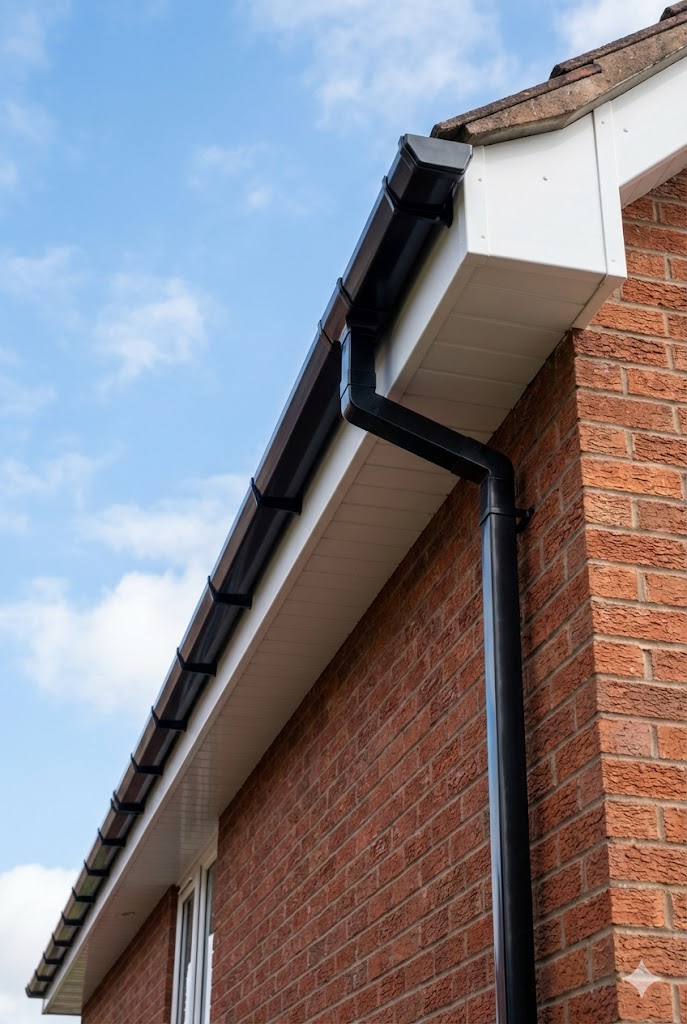
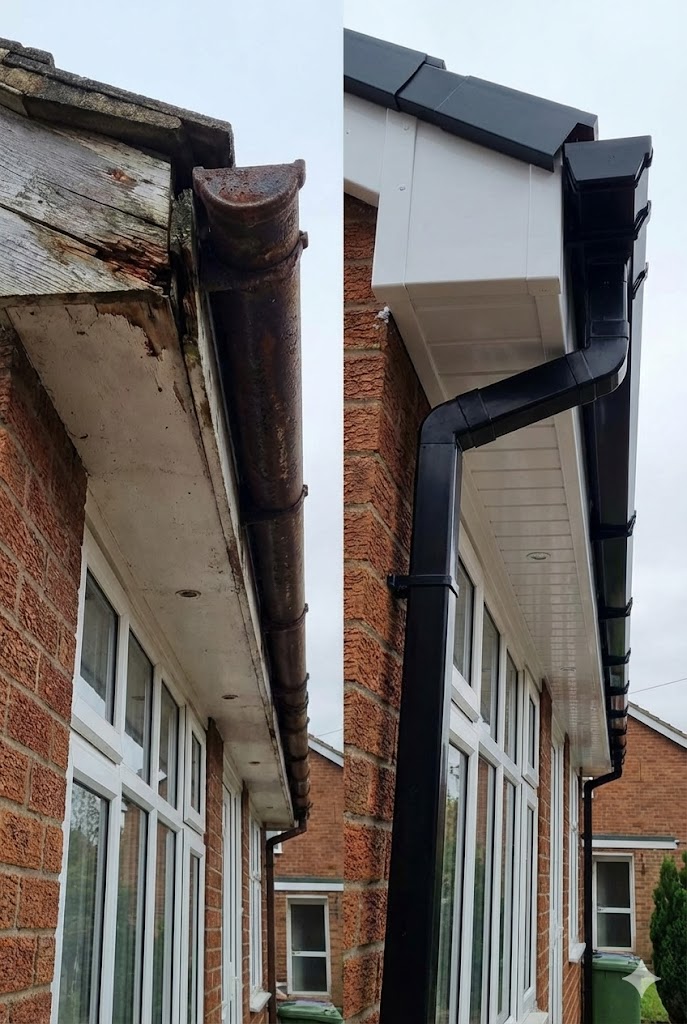
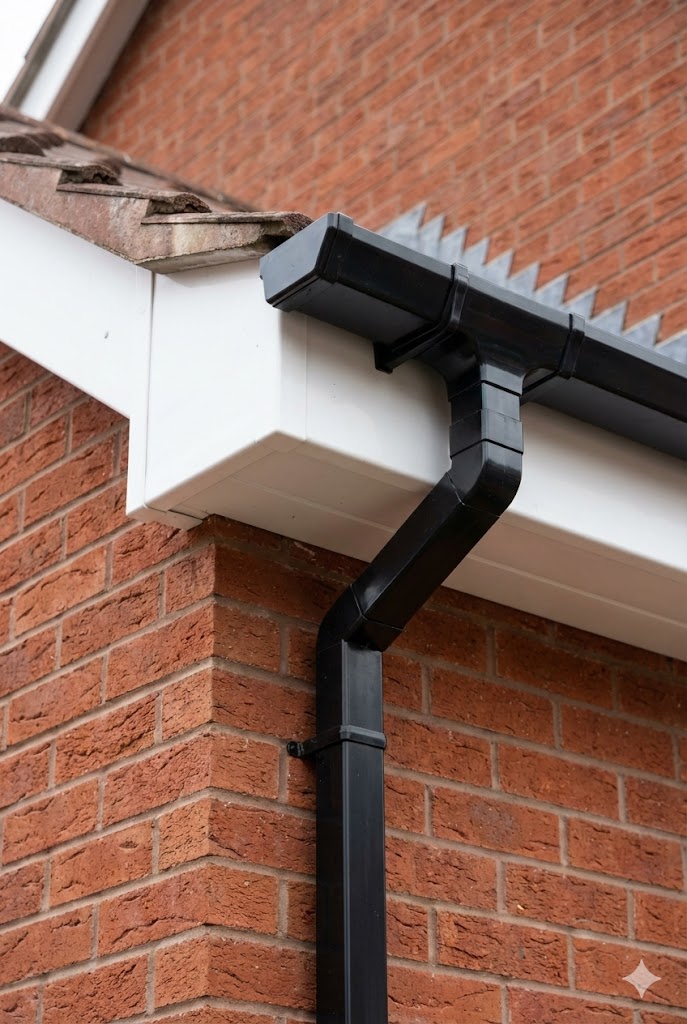
The Fishponds Road Victorian Terrace with Cast Iron
Most likely scenario: one or two joint failures, the downpipe shoe partially blocked, and fascia timber in reasonable condition despite years of intermittent overflow. Recommended approach: clear the shoe, re-seal the failing joints in cast iron compound, and assess whether any sections have internal corrosion requiring replacement. Full cast iron replacement isn't necessary on most of these properties yet — targeted maintenance extends life meaningfully.
The Post-War Semi with 1970s uPVC That's Failing Everywhere at Once
Most likely scenario: multiple joint clips failed simultaneously, brackets pulling away from the fascia at three or four points, and downpipes discharging correctly but the gutter above them barely draining. Recommended approach: full replacement in modern high-capacity uPVC. The age and simultaneous failure pattern means targeted repairs will cost more than replacement over two winters.
The Loft Conversion Property with Overflow Below the Velux
Most likely scenario: gutter overflow directly below a Velux installation during heavy rain only, guttering otherwise performing acceptably. Recommended approach: assess whether the outlet capacity is adequate for the combined drainage load from the roof slope and rooflight aprons. Often resolved by adding a second outlet and short downpipe section at the overflow point rather than replacing the full gutter run.

Loft conversion drainage overflow, Victorian cast iron needing assessment, or post-war uPVC failing across the board? Call Thomas. Free full-property survey with Velux positions checked, written quote, no obligation.

We don’t just "patch leaks." At TD Roofing we deliver engineered solutions specifically designed to withstand the high-velocity winds of the Severn Estuary. Every project is executed strictly to BS 5534 standards, ensuring your home has the maximum wind resistance and structural longevity required for the Bristol climate.


TD Roofing Contractors are your local roofing contractors in Bristol, providing 20+ years of expert service. From emergency roof repairs to new slate installations, we cover all BS postcodes with quality and integrity.
Copyright © 2026 TD Roofing Contractors LTD. All Rights Reserved.
Web Design by Tradesman Marketing Experts